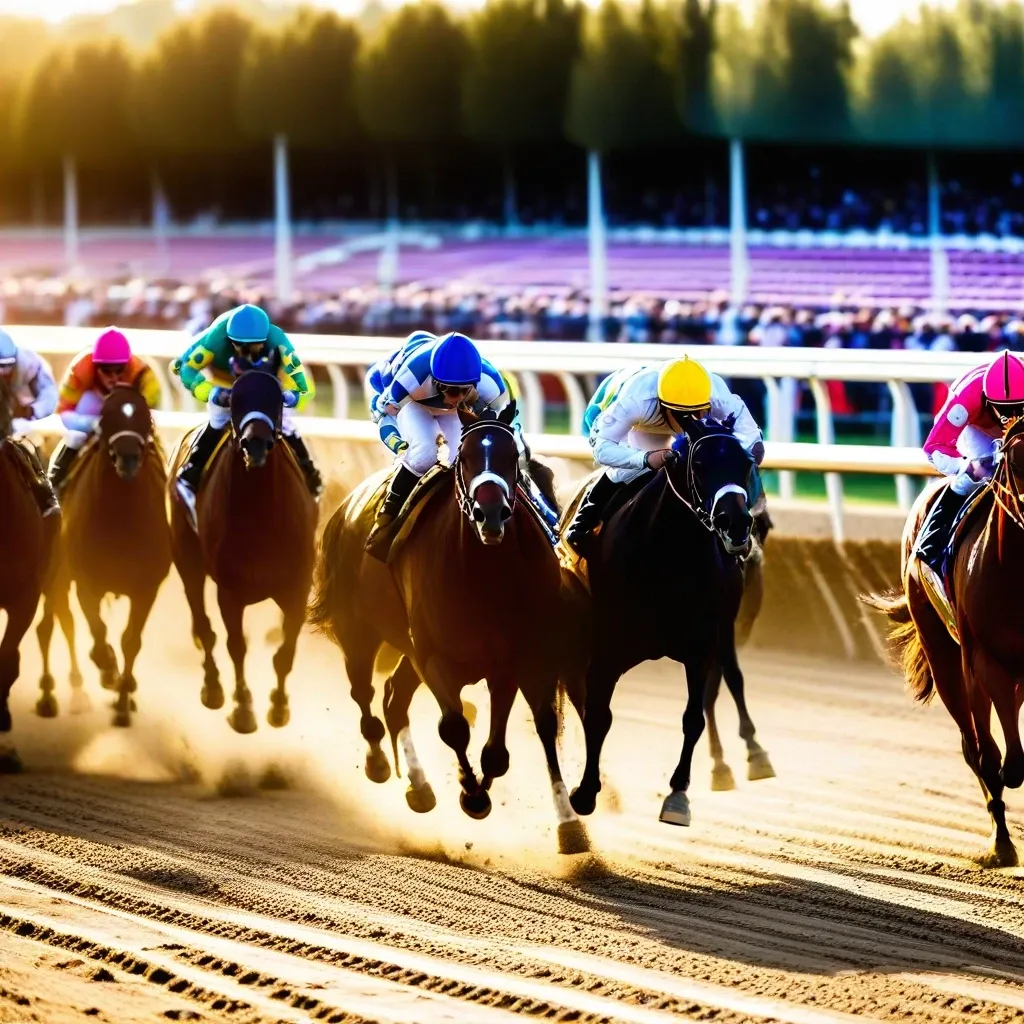
From a wide-eyed spectator to a seasoned bettor, my journey into the world of horse racing has been nothing short of exhilarating. The thundering hooves, the vibrant colors, and the electric atmosphere – it’s a sport that truly captivates. But beyond the spectacle lies a world of strategy, analysis, and the potential for lucrative winnings. The horse racing industry generates billions annually, proving its enduring appeal and the opportunities it presents for savvy bettors.
This beginner’s guide isn’t just about placing bets; it’s about understanding the nuances of the game, making informed decisions, and ultimately, increasing your chances of success. We’ll delve into everything from decoding the racing form to identifying valuable odds and implementing effective betting strategies. However, before we dive in, let’s remember the golden rule: responsible gambling. Betting should be fun, and it’s crucial to approach it with a clear head and a predetermined budget. With that in mind, let’s embark on this exciting journey to learn how to place winning bets on horse racing.
Understanding the Basics of Horse Racing
Key Horse Racing Terms
Diving into the world of horse racing can seem daunting at first, but understanding a few key terms will quickly get you up to speed. Here’s a breakdown of essential horse racing terminology:
- Win: This is the most straightforward bet. Your chosen horse must finish first for you to win.
- Place: To win this bet, your horse needs to finish either first or second.
- Show: Your horse must finish in the top three (first, second, or third) to win a “show” bet.
- Odds: Odds represent the ratio between the amounts staked by parties to a bet. They dictate how much money you could win compared to your stake. For example, odds of 5-1 mean you win $5 for every $1 you bet.
- Post Position: This refers to the assigned starting gate position for each horse in a race. The inside post position is number 1, and they increase sequentially outwards. Post position can influence a horse’s strategy and chances of winning.
- Furlong: A furlong is a unit of distance equal to one-eighth of a mile (220 yards). Race distances are often described in furlongs.
- Claiming Race: This is a type of race where the horses are available for purchase (“claiming”) by other owners.
- Allowance Race: This race is for horses that meet specific conditions, such as age or past performance, and often offers a higher purse than claiming races.
Decoding the Racing Form: A Step-by-Step Guide
The racing form. To the uninitiated, it’s just a confusing jumble of numbers, names, and strange abbreviations. But to the savvy horseplayer, it’s a treasure map, a key to unlocking potential winners. This guide breaks down the racing form, transforming it from an enigma into a powerful handicapping tool. We will focus on key information, such as past performances, speed figures, and how track conditions can influence a horse’s chances.
Understanding Past Performances
Past performances are like a horse’s resume, detailing their career history. Within these dense blocks of text and numbers lies a wealth of information. You’ll see the dates of previous races, the tracks where they ran, the distances, and the type of race (maiden, allowance, stakes, etc.). The crucial elements are the finishing position, the number of horses in the race, and the running line. The running line shows the horse’s position at various points during the race (e.g., 1/4 mile, 1/2 mile, stretch call) and their final placing. Looking at these patterns, you might notice a horse that consistently improves in the final stages or one that fades after a strong start. Also, attention should be paid to speed ratings and earnings as they offer insight into the horse’s capabilities and consistency. For instance, a horse that consistently earns high speed ratings in similar race conditions is a strong contender.
Interpreting Speed Figures and Ratings
Speed figures are an attempt to boil down a horse’s performance into a single, comparable number. These figures take into account the horse’s finishing time, the distance of the race, and the track conditions on that particular day. The methodology behind calculating speed figures varies depending on the provider, but the goal is always the same: to provide a standardized metric for evaluating performance. Comparing speed figures across different tracks is where things get interesting. A 90 at one track might be equivalent to an 85 at another, due to differences in track surface and configuration. Some handicappers develop their own proprietary speed rating systems, incorporating factors like pace, weight carried, and the quality of competition. Speed figures are not the definitive answer, but they serve as a valuable input in overall assessment. For example, a horse consistently achieving speed figures between 85 and 90 is entering a race where the average winning speed figure is 82, it strongly suggests that the horse should be strongly considered. However, it is crucial to consider other variables to create an informed decision.
Types of Horse Racing Bets: From Simple to Complex
Understanding Straight Bets: Win, Place, and Show
Horse racing offers a variety of betting options, catering to different risk appetites and levels of expertise. The simplest of these are known as “straight bets”: Win, Place, and Show. A “Win” bet is straightforward: you’re betting that your chosen horse will finish first. If it does, you win! A “Place” bet means you’re wagering that your horse will finish either first or second. This gives you a slightly better chance of winning, but typically results in a lower payout than a Win bet. Finally, a “Show” bet is a wager that your horse will finish in the top three. This is the safest of the straight bets, offering the highest probability of winning, but correspondingly the lowest potential payout. Horse racing odds are usually displayed in a fractional format. For example, odds of 5/1 mean that for every $1 you bet, you stand to win $5, plus you get your original dollar back. Each track determines the odds based on the amount of money wagered on each horse. If a horse is heavily favored, its odds will be lower, reflecting its higher probability of winning, and therefore a lower payout.
Exploring Exotic Bets: Exacta, Trifecta, and Superfecta
For those seeking bigger payouts and willing to embrace higher risk, exotic bets offer a more thrilling experience. An “Exacta” bet requires you to correctly predict the first two horses to finish, in the exact order. To place an Exacta, you select two horses and specify which you believe will come in first and which will come in second. A “Trifecta” raises the stakes further, demanding that you correctly predict the first three finishers in the correct order. This is a much more challenging bet, but the potential rewards are significantly greater. The “Superfecta” is the most difficult of these bets, requiring you to pinpoint the first four finishers in the precise order. These exotic bets require a keen understanding of the horses, the track conditions, and the jockeys. Some popular strategies for exotic bets include “boxing” your selections, which means you choose a set of horses and they can finish in any order (though this increases the cost of your bet), or “keying” a horse, where you select one horse to finish in a specific position (usually first) and combine it with other horses in the remaining positions.
Developing a Winning Betting Strategy
Crafting a successful betting strategy is an art and a science, a blend of keen observation, meticulous research, and unwavering discipline. It’s not about chasing quick wins; it’s about building a sustainable approach that maximizes your chances of long-term profitability. The thrill of a well-placed bet comes not just from the potential payout, but also from the knowledge that your decision was rooted in sound reasoning.
Research is the bedrock of any robust betting strategy. Dive deep into the statistics, analyze past performances, and scrutinize every available piece of information. For horse racing, this means studying the form of each horse, the jockey’s record, the track conditions, and even the weather forecast. In team sports, delve into team statistics, player injuries, head-to-head records, and tactical analyses. The more comprehensive your research, the better equipped you’ll be to make informed decisions.
Speaking of informed decisions, they aren’t always about backing the favorite. Sometimes, the real value lies in identifying underdogs that have been unfairly discounted by the market. This requires a keen eye for detail and an ability to spot discrepancies between perceived probabilities and actual potential.
Bankroll management is important to keep playing. I like to set aside a specific amount of money solely for betting purposes. This is my “betting bankroll,” and I treat it as a separate entity from my other finances. I then divide my bankroll into smaller units, typically 1-2% of the total, and use these units as the basis for my bets. This approach ensures that even a string of losses won’t wipe out your entire bankroll, allowing you to stay in the game and continue honing your strategy.
I once placed a bet on an underdog in a horse race. Everyone was focused on the favorite, a seasoned champion with a string of victories under its belt. But I had noticed something in the champion’s recent performances – a slight dip in speed, a hint of fatigue. Meanwhile, the underdog, a lesser-known contender, had been steadily improving, consistently clocking faster times in training. The odds were heavily stacked against the underdog, but my research told me otherwise. I placed my bet, and to the surprise of many, the underdog surged ahead in the final stretch, securing a stunning victory. The payout was substantial, but the real reward was the validation of my analytical approach.
Effective Bankroll Management Techniques
Responsible betting starts with effective bankroll management. Set clear betting limits and stick to them, regardless of whether you’re on a winning or losing streak. Avoid the temptation to chase losses by increasing your bet size, as this can quickly deplete your bankroll and lead to reckless decisions. Treat betting as a form of entertainment with a budget, not as a get-rich-quick scheme.
Finding Value Bets and Identifying Over/Under Odds
Value bets are those where the odds offered by the bookmaker are higher than your assessment of the actual probability of the outcome. Identifying value requires comparing odds across different platforms and doing your own handicapping to determine the “true” odds. Over/under bets focus on whether a specific statistic in a game will be higher or lower than a threshold set by the bookmaker. Spotting inefficiencies in these odds requires careful analysis of historical data and current trends.
Track Conditions and How They Impact Races
Understanding Different Track Surfaces
Horse racing isn’t just about picking the fastest horse; it’s about picking the horse best suited to the day’s specific challenge. The track surface plays a massive role, and understanding the nuances of dirt, turf, and synthetic tracks is crucial for making informed betting decisions. A horse that dominates on dirt might struggle on turf, and vice-versa.
Dirt tracks, the most common in North America, favor horses with speed and stamina. Turf tracks, made of grass, demand agility and a quick burst of acceleration. European horses, are often more experienced with turf racing. Synthetic tracks, like Polytrack or Tapeta, offer a more consistent surface, less affected by weather. Each surface creates a different ‘track bias,’ meaning certain running styles or post positions might have an advantage depending on how the track is playing that day.
The weather will change the track conditions. When it rains, the dirt track can turn into a sloppy or muddy mess. Some horses LOVE running in the mud. They are able to handle the challenging conditions, they power through where others falter. Other runners will find themselves struggling. Therefore, track conditions are a great and important insight when making betting decisions!
Responsible Gambling: Staying in Control
Responsible gambling is crucial for enjoying betting without negative consequences. It involves understanding the risks, setting limits, and recognizing when gambling becomes a problem. Compulsive gambling can manifest in various ways, including chasing losses, gambling with money needed for essentials, and neglecting responsibilities. Setting betting limits is vital, determining in advance how much money and time to spend gambling and sticking to those limits regardless of wins or losses.
Setting Limits and Recognizing Problem Gambling
To gamble responsibly, one should establish betting limits before starting. This involves deciding on a budget and a timeframe for gambling activities. Some of the warning signs of problem gambling include increasing bet amounts over time to achieve the same thrill, borrowing money to gamble, and feeling irritable when not gambling.